
Types of Pipes Used in Fire Fighting Systems – A Complete Guide
Fire safety is one of the most important aspects of modern construction, especially for high-rise buildings, commercial complexes, industrial plants, and residential societies. A fire fighting system is only as strong as its backbone—the network of pipes that supply water to hydrants, sprinklers, and other fire suppression equipment. Choosing the right pipe material is crucial for the efficiency, durability, and compliance of the entire system.
At SSE&S Engineers, we specialize in designing and installing fire fighting systems with IS-compliant, high-quality pipes that ensure safety, reliability, and long-term performance. In this guide, we’ll explain the different types of pipes used in fire fighting systems and their applications.
1. MS (Mild Steel) Pipes – The Industry Standard
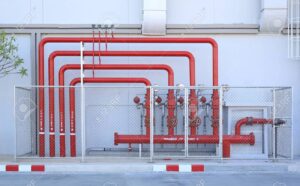
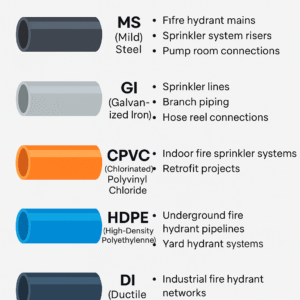
Mild Steel pipes are the most widely used in fire fighting networks. They are strong, durable, and capable of handling high pressure, making them suitable for hydrants, sprinkler systems, and pump connections.
-
Advantages:
-
High tensile strength
-
Long service life when properly coated
-
Ideal for underground and overhead installations
-
-
Applications:
-
Fire hydrant mains
-
Sprinkler system risers
-
Pump room connections
-
👉 At SSE&S Engineers, we ensure that all MS pipes are IS 1239 / IS 3589 compliant, meeting the highest safety standards.
2. GI (Galvanized Iron) Pipes
Galvanized Iron pipes are essentially steel pipes coated with a layer of zinc to protect them from corrosion. They are often used for wet riser systems in residential and commercial buildings.
-
Advantages:
-
Better corrosion resistance than plain MS pipes
-
Suitable for above-ground use in shafts and basements
-
-
Applications:
-
Sprinkler lines
-
Branch piping
-
Hose reel connections
-
GI pipes require periodic inspection to ensure the zinc coating remains intact, especially in humid environments.
3. CPVC (Chlorinated Polyvinyl Chloride) Pipes
In smaller residential or office projects, CPVC pipes are gaining popularity for sprinkler systems. They are lightweight, easy to install, and resistant to corrosion.
-
Advantages:
-
Quick and cost-effective installation
-
Resistant to rust and scaling
-
Good for low-rise apartments and offices
-
-
Applications:
-
Indoor fire sprinkler systems
-
Retrofit projects where lightweight piping is required
-
However, CPVC pipes are not suitable for high-pressure outdoor hydrant systems.
4. HDPE (High-Density Polyethylene) Pipes
HDPE pipes are flexible, lightweight, and highly resistant to chemicals and corrosion. They are commonly used for underground fire water mains.
-
Advantages:
-
Corrosion-free and leak-resistant
-
Flexible and easy to lay in trenches
-
Long life with minimal maintenance
-
-
Applications:
-
Underground fire hydrant pipelines
-
Yard hydrant systems
-
External fire water distribution
-
HDPE pipes are often preferred where soil conditions are corrosive or where trenching needs flexibility.
5. Ductile Iron (DI) Pipes
Ductile Iron pipes are stronger than standard cast iron and offer excellent durability. They are often used in large-scale industrial fire protection systems.
-
Advantages:
-
High pressure and impact resistance
-
Long service life
-
-
Applications:
-
Industrial fire hydrant networks
-
Municipal water supply for fire lines
-
While DI pipes are more expensive, they provide superior performance for heavy-duty fire fighting applications.
Choosing the Right Pipe for Your Fire Fighting System
The selection of pipe material depends on several factors, including:
-
Building type (residential, commercial, or industrial)
-
Pressure requirements of the system
-
Exposure to environmental conditions (corrosion, humidity, soil type)
-
Compliance with IS standards and NBC guidelines
At SSE&S Engineers, our fire safety experts carefully evaluate these factors before recommending the most suitable piping material. We ensure every installation is safe, compliant, and built to last.
Why SSE&S Engineers?
With years of experience in fire safety, SSE&S Engineers has established itself as the most trusted and reliable brand in the fire fighting industry. We provide:
-
✅ End-to-end fire protection solutions (design, supply, installation, and AMC)
-
✅ IS & NBC-compliant piping and fittings
-
✅ Expertise in hydrant, sprinkler, suppression, and extinguisher systems
-
✅ Tailored solutions for apartments, hospitals, offices, and industrial plants
When you choose us, you’re not just getting pipes—you’re getting complete peace of mind.
Final Thoughts
Pipes are the lifelines of any fire fighting system. From MS and GI pipes in traditional systems to HDPE and CPVC in modern applications, each type has its role in ensuring safety.
If you’re looking to install or upgrade a fire fighting system, SSE&S Engineers is your go-to partner for world-class fire protection solutions.
📞 Contact us today to discuss your project and secure your property with India’s most reliable fire fighting company.