
Industrial Fire Fighting System Installation – A Complete Guide
When it comes to safeguarding factories, warehouses, power plants, and other large-scale facilities, industrial fire fighting system installation is not just a compliance requirement but a critical investment in safety. Industries handle flammable materials, heavy machinery, and complex electrical networks, making them highly vulnerable to fire accidents. Installing a reliable fire protection system ensures both life safety and asset protection while maintaining adherence to national and international fire safety standards.
Why Industrial Fire Fighting Systems Are Important
Unlike residential or small commercial buildings, industrial premises face higher fire risks due to:
-
Large storage of flammable goods such as chemicals, fuels, or raw materials.
-
Continuous machinery operations, which can overheat and spark fires.
-
High electrical loads increasing the chance of short circuits.
-
Human safety risks with large numbers of workers on site.
A properly designed industrial fire fighting system provides:
-
Rapid detection of fire.
-
Automatic suppression to minimize damage.
-
Adequate water supply for hydrant and sprinkler networks.
-
Compliance with safety regulations like NBC 2016 and IS 15105:2021.
Components of an Industrial Fire Fighting System
An effective installation includes multiple sub-systems working together:
-
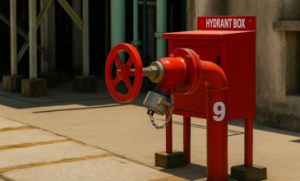
Fire Hydrant System
-
Installed across the facility with hydrant points connected through a network of MS Class C pipes.
-
Helps firefighters draw water instantly during emergencies.
-
-
Automatic Sprinkler System
-
Activated automatically at pre-defined heat levels.
-
Ensures fire suppression even before human intervention.
-
-
Fire Pumps and Pump Room
-
Diesel and electric-driven fire pumps ensure continuous water pressure.
-
Includes jockey pumps for maintaining line pressure.
-
-
Fire Alarm & Detection System
-
Smoke detectors, heat detectors, and manual call points.
-
Alerts occupants and triggers suppression systems.
-
-
Fire Suppression Systems
-
Clean agent, CO₂, or foam systems used for specialized hazards.
-
Common in power plants, server rooms, and oil refineries.
-
Industrial Fire Fighting System Installation Process
1. Site Survey & Risk Assessment
Fire safety consultants inspect the premises to identify potential fire hazards, storage conditions, and occupancy load.
2. System Design & Approval
-
Detailed drawings and hydraulic calculations are prepared as per IS standards.
-
Approval is taken from fire authorities before execution.
3. Material Selection
-
Pipes (MS Class C, GI, CPVC for sprinklers).
-
Valves, hydrant accessories, pumps, and sprinklers.
-
ISI-marked fire extinguishers and suppression agents.
4. Installation & Testing
-
Pipe laying, pump room setup, hydrant and sprinkler installation.
-
Pressure testing as per IS 1239 / IS 15105.
5. Commissioning & Handover
-
Final testing of water flow, alarms, and suppression.
-
Training provided to facility staff.
Compliance and Standards
Industrial fire fighting system installation in India must comply with:
-
National Building Code (NBC) 2016 – Part 4 (Fire & Life Safety).
-
IS 15105:2021 – Automatic Sprinkler Installations.
-
IS 13039:1991 – Installation of Hydrant Systems.
-
Local Fire Department Guidelines.
Internationally, NFPA (National Fire Protection Association) standards are also widely followed.
Choosing the Right Fire Fighting Contractor
When selecting a contractor for industrial fire fighting system installation, ensure they have:
-
Experience in handling large industrial projects.
-
Certified engineers familiar with IS and NBC standards.
-
Ability to provide end-to-end services – design, installation, testing, and AMC.
-
Approved vendor list and use of ISI-marked equipment.
Conclusion
Installing an industrial fire fighting system is essential for ensuring uninterrupted operations and protecting both human lives and capital assets. Whether it’s a hydrant network, sprinkler system, fire pumps, or suppression system, proper installation and regular maintenance play a vital role in industrial fire safety.
If you are planning an industrial fire fighting system installation in Delhi, NCR, or across India, our team of experts can help you with design, supply, installation, testing, and commissioning as per NBC and IS standards.